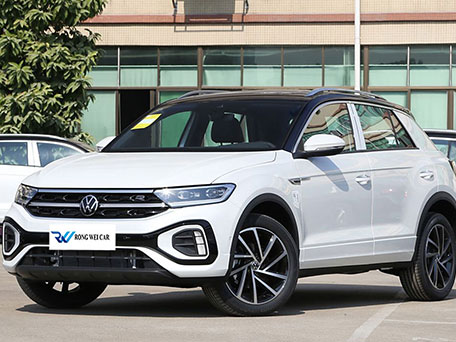
Welcome To Rongwei Car International Trading Co., Ltd
Welcome To Rongwei Car International Trading Co., Ltd

Amidst the profound restructuring of the contemporary world economy and industrial landscape, the global automotive industry is undergoing unprecedented historical changes. Across this industry-spanning leap transcending time and space, automotive products and supply chain systems under the “Made in China” banner have accomplished a majestic historical breakthrough—transitioning from early-stage technological chasing and market following to comprehensively leading global electrification and intelligent tracks, while reshaping the map of international complete vehicle trade at an astonishing pace.
In-depth reviewing of the evolutionary trajectory of China’s automotive exports from following to leading, analyzing core competitive advantages underpinning it, and forecasting future evolution directions of global bulk automotive trade carry vital strategic significance for grasping the next golden decade of the international automotive industry.

Reviewing the initial phases of China’s automotive march toward the world, “Made in China” remained positioned within the mid-to-low ends of the international automotive industrial value chain for a prolonged period.
Faced with rigorous destination market access regulations and fierce competition, Chinese automotive manufacturers refused to linger within the comfort zone of low-end OEM contract manufacturing. Through decades of relentless overseas user feedback iteration, manufacturing process upgrades, and quality management system construction benchmarking against highest international standards, Chinese automobiles achieved a qualitative leap in mechanical literacy, failure rate control, and coating craftsmanship.

If “following” during the traditional fuel vehicle era represented a grueling uphill climb, the wave centered on New Energy Vehicles (NEVs) and Intelligent Connected Vehicles (ICVs) provided the Chinese automotive industry with a flawless “lane-changing overtaking” opportunity.
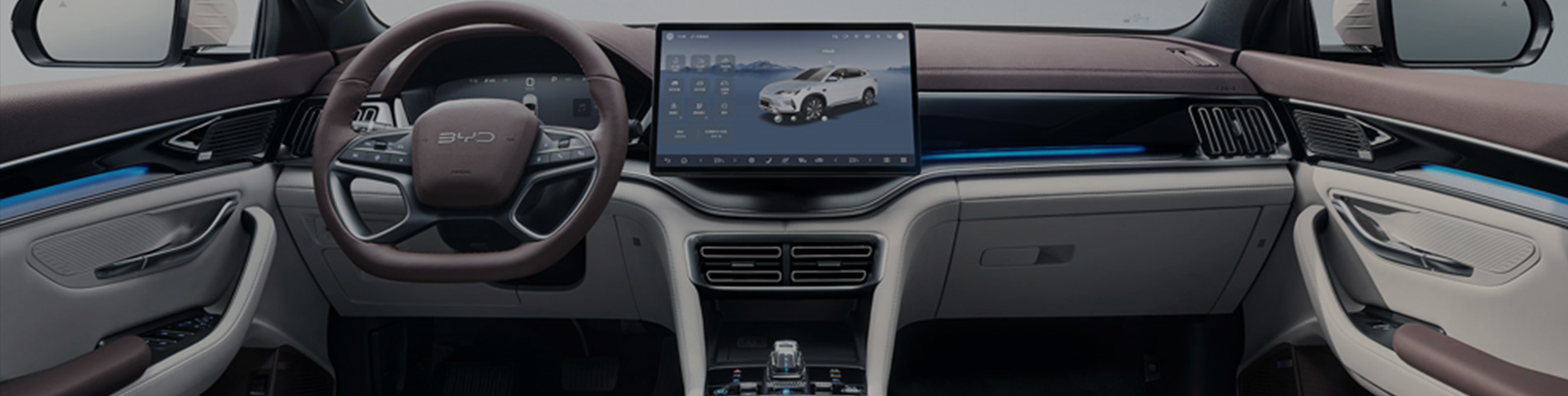
While overseas traditional legacy automakers remained hesitant, Chinese automakers standardized large-screen interactions, advanced driver-assistance systems (ADAS), in-vehicle artificial intelligence, and over-the-air (OTA) software upgrades. This unparalleled intelligent experience triggered strong demonstration effects across overseas consumer terminals, enabling Chinese automobiles to successfully strip away the “cheap OEM” label and establish a tech-leading high-end image.

Entering the current novel development phase, the role of “Made in China” within international automotive trade has upgraded from mere “product sales” to a comprehensive, multi-dimensional “ecosystem leadership.”
Leading Chinese automakers and professional parallel export service providers no longer rely on fragmented “guerrilla-style” trading, instead constructing modernized showrooms, standardized spare parts centers, professional after-sales training systems, and financial insurance support closures spanning the Middle East, Latin America, Africa, Europe, and Central Asia.
Faced with localized geopolitics, tariff barriers, and regional trade agreement challenges (such as rules of origin), the Chinese automotive industry is accelerating its evolution toward a 3.0 model of “capital outbound + capacity outbound + brand outbound.” By establishing joint-venture factories and KD assembly bases in overseas strategic hubs, Chinese auto brands genuinely integrate into local societies, sharing industry dividends with global supply chains.

Across this magnificent journey from following to leading, countless Chinese automotive professionals and overseas B2B partners have jointly authored brilliant chapters. Nonetheless, sustaining leading advantages amidst intricate global trade environments demands selecting mature, professional, and compliant supply chain partners.
🏢 Rongwei Car International Trading Co., Ltd.
🌐 Official B2B Gateway: https://rongweiusedcar.com
📱 Direct WhatsApp Line: +86 19339983107
💬 Official Corporate WeChat: +86 19339983107
✉️ Corporate Communication Desk: rongweiqiche@gmail.com
📍 Global Operational Headquarters: Zhengzhou City, Henan Province, China
📞 Ready to ride the wave of China’s automotive export leadership? Contact Rongwei Car International Trading Co., Ltd. today for cutting-edge B2B vehicle sourcing, professional export advisory, and trusted global trade partnerships.